
Swig & Swine owner learned how to deal with the high pressure of the restaurant industry while aboard a submarine
by Lorne Chambers | Editor
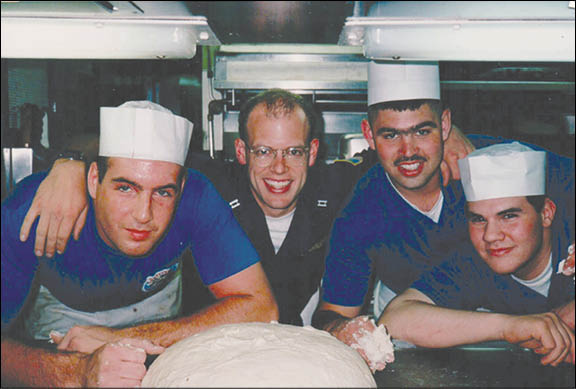
As the old adage goes, if you can’t take the heat, get out of the kitchen. But when you’re hundreds of feet beneath the Mediterranean Sea in a metal tube the length of a football field and only half as wide, there isn’t anywhere else to go. Especially when you’re 6-foot-5, and there are 130 hungry sailors counting on you for their next meal.
Before he was the larger-than-life face of Swig & Swine, one of the most celebrated BBQ joints in the Southeast, before all the awards and accolades, before he owned six restaurants spread along the South Carolina coast, he was Petty Officer Second Class Anthony DiBernardo with the United States Navy aboard the USS Batfish (SSN-681), a nuclear-powered Sturgeon-class attack submarine.
During the early 1990s, as the United States fought Operation Desert Storm and tensions simmered throughout the Middle East, DiBernardo was discovering lessons in leadership, organization, and service that would shape the rest of his life.
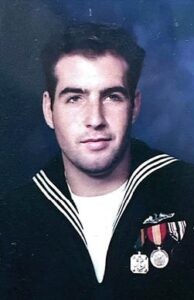 As we celebrate our country’s 250th anniversary, it’s a good time to look back at the men and women who sacrificed and served so that we may have a more perfect union. For DiBernardo, it’s a chance to look back on his own journey and appreciate how it has shaped who he is today and how he approaches his business.
Reflecting on those four years—most of which were spent underwater—he credits his time in the galley of the Batfish with shaping the person he became.
“Those four years allowed me to do what I do today,” says DiBernardo, who makes a direct connection between feeding sailors aboard a submarine and feeding customers today.
“We make people happy with barbecue.”
After scoring high on all the Navy’s aptitude tests, recruiters had initially encouraged DiBernardo to pursue nuclear or other technical specialties. But he was determined to become a cook.
“Everybody was pushing me toward nuclear and everything under the sun, but I said, ‘I want to cook’,” recalls DiBernardo, whose father worked as a butcher in Philadelphia’s Italian Market and his mother worked in a grocery store in the Italian Market. DiBernardo himself spent time helping on his cousin’s farm growing up.
“Food has always been the centerpiece of my family,” he says.
Over time, he came to realize that cooking was more than a job.
“It wasn’t until years later, maybe 20 years ago, that I realized what I do is really service. A cook has a servant’s heart.”
According to DiBernardo, providing food for others gives him great satisfaction and a sense of purpose.
“I’m a cook. I’m here to serve others. That’s what we do,” he says. “I get pleasure from it. It’s very meaningful to me.”
There’s one sermon he heard years ago that DiBernardo often thinks about. It was about the dash between the dates on a tombstone.
“What does that dash say about you? What have you done with your life?” he asks rhetorically.
For DiBernardo, service is the answer. Service to his country, his family, his customers, and his community.


