
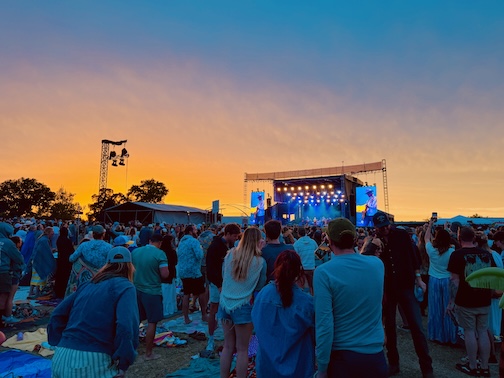
Two days of great weather and better music outshine a few sour notes
by Lorne Chambers | Editor
There are worse ways to spend a spring weekend than being in Riverfront Park with a breeze coming off the Cooper River, live music in the air, and the sun melting into the marsh.
That’s the enduring magic of High Water Festival, which returned April 18-19 to North Charleston with another thoughtfully curated lineup, postcard-perfect weather, and the kind of atmosphere that continues to separate it from the increasingly corporate feel of many national festivals.
High Water has always sold itself less as a mega-festival and more as a well-styled gathering with strong taste. This year’s edition largely delivered on that promise.
Perhaps the most noticeable improvement from earlier years was logistical. Veterans of the festival will remember when grabbing a beer could feel like a side quest that swallowed half a set. Long lines, tapped-out kegs, and slow service once tested patience. This year, bars were spread sensibly throughout the grounds, lines were minimal, and transactions moved quickly. Hydration stations were also easy to find and well-used, a smart and necessary feature during two sunny Lowcountry afternoons.
The layout remains one of High Water’s great strengths. Riverfront Park is a striking venue, an industrial relic turned civic playground, framed by the bones of the old Navy Base and open river views. The walk between stages is easy, and the constant river breeze helps keep the weekend comfortable even when the crowd thickens.
Programming between the two main stages also continues to be one of High Water’s smartest tricks. As one act wrapped, another was ready to begin elsewhere, creating a smooth handoff that kept energy high and downtime low. In a festival landscape where dead air can drain momentum, High Water understands pacing.
And then there was the music.
My Morning Jacket returned to High Water and once again put on a stellar show, although this year’s turned placed them during daylight hours, so their trademark psychedelic lightshow wasn’t as impactful. Alabama Shakes, back on the road after some time off, brought one of the weekend’s most anticipated sets. Fueled by the powerhouse vocals of Brittany Howard, Alabama Shakes are back and a force to be reckoned with. Maren Morris drew a devoted crowd amid some pretty major sound issues. Lake Street Dive, Bruce Hornsby, and Sheryl Crow added veteran polish, while Caamp proved why they remain one of the festival circuit’s most dependable crowd-pleasers.
Beyond the marquee names, High Water also excelled in showcasing fresh, new artists. Singer-songwriter Jesse Welles was among the breakout highlights. Charleston’s Winyah, the lone local group on this year’s bill, represented the home team admirably.
The festival’s side attractions also leaned into fun rather than filler. The Montucky Cold Snacks “Yeehaw Inn” offered a playful retreat from the crush of the grounds, complete with a can-crushing “Drinko” Plinko game and free swag. Even social media star Cornbread Cowboy made an appearance, giving the activation some regional personality.
Still, High Water is not beyond criticism.
The most persistent logistical complaint remains the placement of restrooms. Nearly all bathrooms were clustered in a far corner of the grounds, a trek especially punishing for anyone camped near the main Stono Stage. Reaching them often meant weaving through crowds, passing the Edisto Stage, navigating past the food corridor, and sacrificing valuable chunks of a performance. Festivals are already marathons; basic necessities should not require a pilgrimage.
Even more disappointing were the sound issues on opening night. Morris’ set was at times hampered by muddy, bass-heavy mixing that buried the vocals. Fans sang along gamely, often carrying songs that deserved clearer treatment. Later, Alabama Shakes occasionally sounded strangely muted from parts of the field. Wind off the river can complicate outdoor acoustics, but the inconsistency was noticeable enough to become a common topic amongst the crowd.
Then there were the drink prices.
Even by modern festival standards, Highwater costs felt, well … high. A beer, after tip, pushed toward $20. A double liquor drink approached $29. This kind of pricing can make even veteran concertgoers do a double-take. At a time when tickets, parking, rideshares, and food already stretch budgets, those numbers risk turning indulgence into irritation.
The beer list itself also felt oddly disconnected from the place. With Charleston craft stalwarts Coast Brewing and Holy City within a stone’s throw of the venue, the lack of local options was surprising. Instead, choices leaned largely toward national brands, missing a chance to showcase the city’s brewing culture.
Even so, High Water’s strengths remain substantial. It’s scenic, polished, and ambitious enough to keep improving. It continues to learn from past missteps, even if some stubborn ones remain.
That may be the real story of High Water in 2026: not perfection, but progress, set to a very good soundtrack.


