
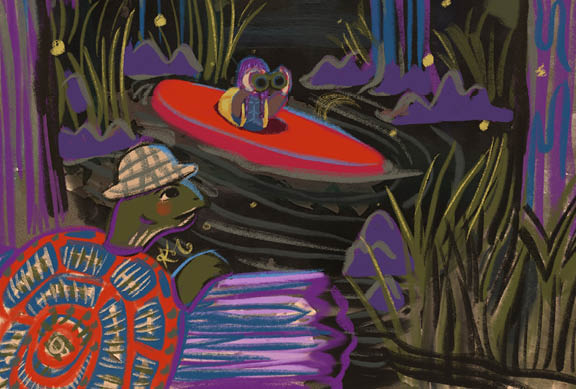
Caw Caw Interpretive Center highlights the hidden role of fireflies in the Lowcountry
by Hanalei Potempa | Contributing Writer
At dusk, the marsh begins to flicker with scattered pulses of green light, each flash part of a silent conversation between species. More than just a seasonal magic, fireflies play many roles in South Carolina’s coastal plain ecosystem.
From freshwater wetlands to maritime forests and old rice fields, their glow often reflects environmental conditions and the overall health of the landscapes they inhabit.
As we enter the season when these beloved insects begin to light up the night, Caw Caw Interpretive Center in Ravenel is hosting an event centered around fireflies and their story. Signals in the Dark: A Firefly Story, taking place on Friday, March 27, is open to attendees of all ages who want to experience the wonder of fireflies in one of the few places in Charleston County where they are still visible.
Caw Caw Interpretive Center is a low-impact wildlife preserve. Kristina Wheeler, Natural History Interpretation Specialist for Charleston County Parks, spends much of her time at the center.
“This is a unique park where you can journey from the past to the present and explore the notion of heritage to habitat,” says Wheeler. “Rich in natural, cultural and historical resources, Caw Caw was once part of several rice plantations and home to enslaved Africans who applied their technology and skills in agriculture to carve the series of rice fields out of cypress swamps.”
Wheeler was inspired to create the firefly event because she has always loved fireflies and wanted to “shine a light” on their often-overlooked role in coastal plain ecosystems.
She notes that while the synchronous fireflies at Congaree National Park have captured national attention, that synchronized flashing is just one specialized behavior. Most fireflies do not flash in unison, as each species has its own unique light pattern and habitat preference.
“Along the coastal plain, including places like Caw Caw Interpretive Center, these species thrive in marshes, damp fields, and forest edges where dark skies and healthy soils support their life cycle,” says Wheeler. “By understanding that firefly diversity goes far beyond synchronized displays, we can better appreciate—and protect—the quieter, scattered light shows happening right in our own backyard.”
Wheeler explained that fireflies are highly sensitive to changes in soil moisture, soil quality, pesticide use, and artificial light. Their responses to these changes can reveal a great deal about the health of an ecosystem.
“Because their larvae live in damp soil and leaf litter for up to two years, their presence signals healthy wetlands, intact forest edges, and low levels of chemical disturbance. When fireflies disappear, it often reflects habitat degradation,” says Wheeler.
Fireflies also serve as important predators, feeding on soft-bodied invertebrates such as snails, slugs, and worms—species that could otherwise become overpopulated. In this way, they help maintain ecological balance.
 Adult fireflies glow to warn predators that they contain chemicals that make them taste bad or unsafe to eat, but they are still part of the food chain. Animals like birds, spiders, amphibians, and reptiles may still eat them, especially during their larval stage.
During that larval stage, fireflies play another key role. As they live and move through soil and fallen leaves, they help break down dead material and recycle nutrients—an especially important function in the wet, nutrient-rich soils of the coastal plain.
Beyond their ecological and biological roles, Wheeler shared that fireflies also hold strong sentimental and cultural meaning across the South.
“The attention drawn to synchronous fireflies at Congaree National Park has highlighted how rare intact habitats have become. Coastal plain populations – even the quieter, non-synchronous species – remind us that preserving dark skies, wetlands, and native landscapes benefits both biodiversity and community heritage,” says Wheeler.
The Signals in the Dark: A Firefly Story event offers both beautiful views and eye-opening education.
“You’ll not only watch for fireflies glow over the marsh at dusk, but also learn how these tiny lanterns signal healthy wetlands and play a vital role in our coastal plain ecosystem,” says Wheeler.
Along the way, visitors will learn about their life cycle, behavior, and the science behind their bioluminescence, while experiencing their twinkling display lighting up the night.
The program follows a flat, looped trail at a moderately slow pace, with benches available along the route for resting and observation. Accessible parking, restrooms, water fountains, and picnic tables are also available at the site.
In their brief flashes, fireflies offer more than beauty—they reflect the health of the landscapes we depend on and the importance of protecting them.
Signals in the Dark: A Firefly Story will take place on Friday, March 27. Caw Caw Interpretive Center is located at 5200 Savannah Hwy. The cost is $12, and space is limited. To reserve a spot, call (843) 795-4386 or visit www.ccprc.com.


